
· Brian Horton · Pipeline Project · 3 min read
Natural Gas Pipeline Expansions Enhance U.S. Production and Market Access
In 2024, the U.S. energy sector saw significant growth in natural gas transportation, with completed pipeline projects adding approximately 6.5 Bcf/d of takeaway capacity
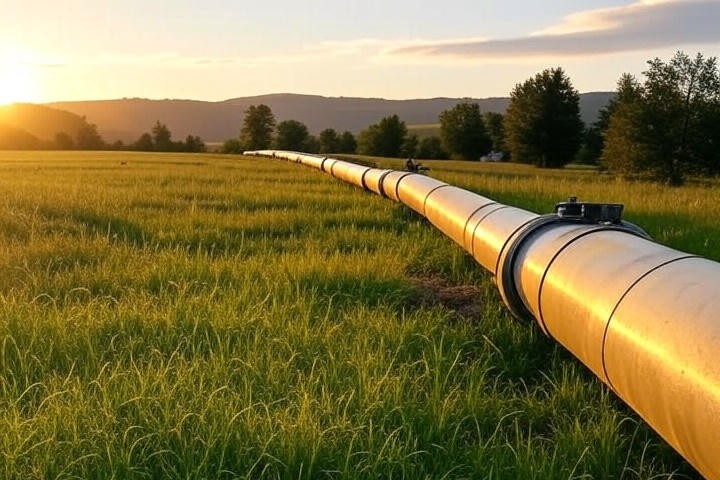
In 2024, the U.S. natural gas industry saw significant growth in transportation capacity with the completion of new pipeline projects that added approximately 6.5 billion cubic feet per day (Bcf/d) of takeaway capacity. These expansions are essential for meeting the growing demand for natural gas, improving market access, and reducing regional price volatility.
Key Areas Benefiting from Pipeline Expansions
The majority of the increased pipeline capacity benefits key natural gas production areas, including the Permian Basin, Haynesville Shale, and Marcellus Shale. These regions have seen dramatic increases in natural gas production, and the expansions are crucial for moving that gas to markets in the U.S. and beyond. The addition of new pipeline capacity from these regions to major demand centers along the Gulf Coast and in the Northeast is improving both the efficiency and reliability of natural gas transportation.
Notable Pipeline Projects and Their Impact
The U.S. Energy Information Administration (EIA) highlights several key pipeline projects that have been completed recently. These projects have played a significant role in increasing the capacity to transport natural gas from production regions to market. Among the major projects, the Mountain Valley Pipeline, which is expected to add 2.0 Bcf/d of takeaway capacity, stands out as a vital development for the Marcellus and Utica shales.
Another important project, the Permian Highway Pipeline, which went online in early 2024, brings 2.1 Bcf/d of additional capacity from the Permian Basin to the Gulf Coast, enhancing access to both domestic markets and export facilities. These projects are key components of the broader effort to alleviate bottlenecks in the natural gas transportation system.
Benefits of Increased Pipeline Capacity
The expansion of pipeline capacity provides several critical benefits. It enhances producers’ ability to move natural gas from production regions to high-demand areas, helping to stabilize prices. In regions where pipeline capacity was previously constrained, producers often faced significant price fluctuations due to oversupply and limited transport options. By improving infrastructure, these new pipelines provide more flexibility in moving natural gas to where it’s needed most.
Additionally, the expanded infrastructure supports the growth of liquefied natural gas (LNG) exports. The U.S. has become one of the world’s leading exporters of LNG, and with increasing global demand for natural gas, expanded pipeline capacity is essential to delivering gas to LNG export terminals, particularly along the Gulf Coast.
Future Outlook and Challenges
While these pipeline expansions are critical to meeting current needs, the U.S. natural gas industry faces ongoing challenges. Further pipeline infrastructure will be required to accommodate future production growth. Regulatory and environmental issues, as well as opposition from local communities, can create delays and obstacles for new projects.
Despite these challenges, the continued expansion of pipeline networks is expected to be a central element of the U.S. energy strategy in the coming years. New projects and further investments will be necessary to ensure the continued efficiency and security of the natural gas supply chain.
Conclusion
The natural gas pipeline expansions completed in 2024 are vital for enhancing production capacity, improving market access, and stabilizing prices in the U.S. natural gas sector. As these new pipelines help alleviate regional constraints, they support the growing demand for natural gas both domestically and internationally. Ongoing investments in pipeline infrastructure will be crucial to maintaining a reliable, stable, and sustainable energy system for the U.S.
- Permian Basin
- Marcellus
- Mountain Valley Pipeline
- Permian Highway Pipeline